Affiliate Disclosure: We may earn a commission if you purchase through our links, at no extra cost to you. Our editorial selections are independent.
A vacuum sealer is one of the highest-return investments in a home kitchen. By removing nearly all oxygen from a sealed bag or container, it extends the freezer life of proteins from two to three months to well over a year, eliminates freezer burn, and enables sous vide cooking at precise temperatures that stovetop methods cannot replicate. Beyond the freezer, vacuum sealers extend the refrigerator life of cheeses, charcuterie, and prepped vegetables by two to three times. In 2026, the market ranges from simple one-touch compact sealers to multi-mode systems with accessories for jar and canister sealing. We evaluated six models for suction power, seal consistency, bag compatibility, and real-world kitchen versatility.
Quick Comparison
Product
Best For
Key Feature
Top Con
Link
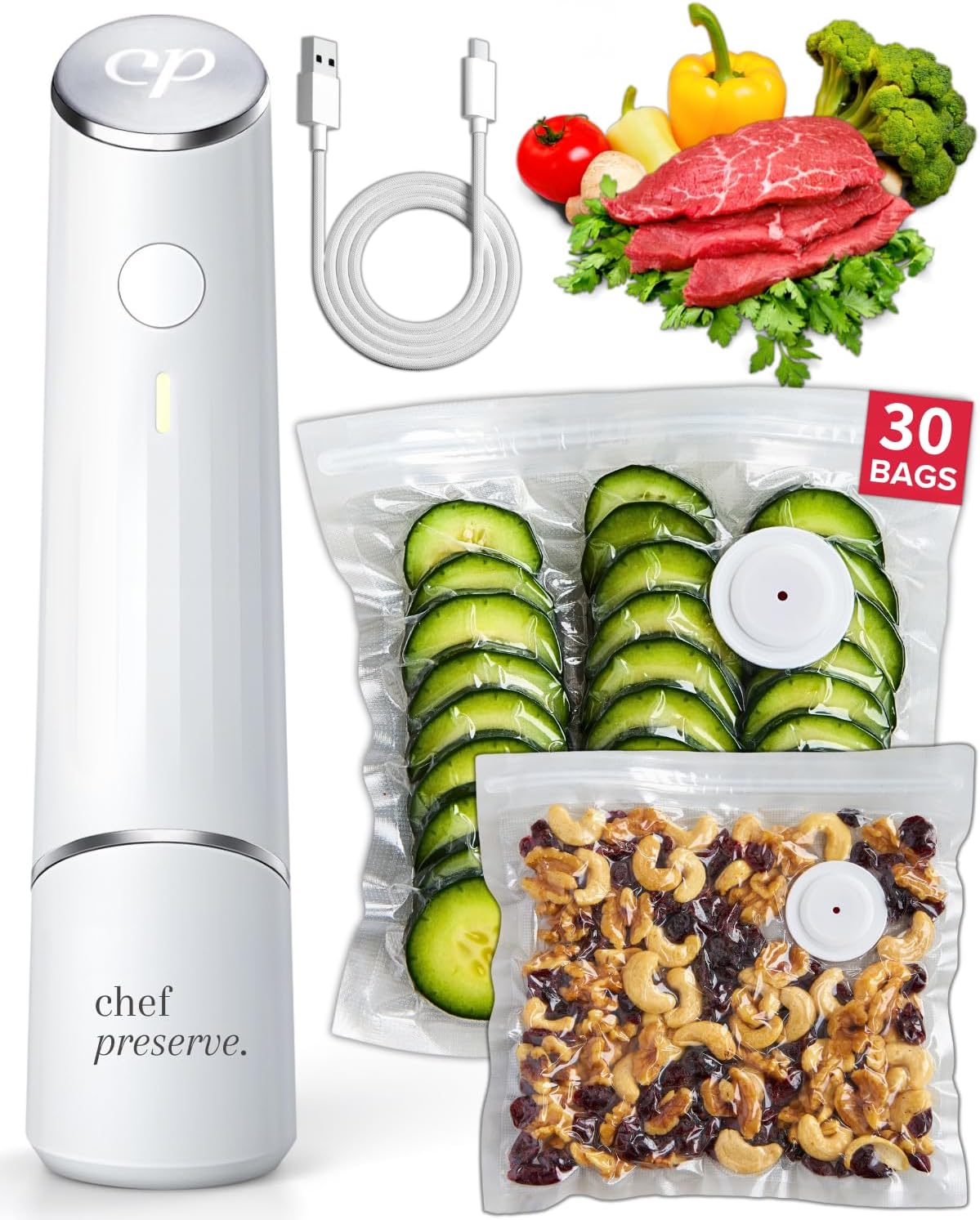
Chef Preserve Compact Vacuum Sealer + 30 Bags
Best Overall
Includes 30 bags so you can seal your first meal prep session immediately
Single seal mode less flexible than dual-mode models for wet ingredients
Pro Tip: Pre-freeze marinated proteins for 30 minutes before vacuum sealing — partial freezing prevents liquid from being sucked into the sealer during the vacuum cycle.
1.EDITOR'S PICK
Chef Preserve Compact Vacuum Sealer + 30 Bags
A compact yet powerful external vacuum sealer that arrives ready to use with 30 pre-cut bags included — ideal for meal preppers who want a no-fuss setup without sacrificing seal quality.
Considerations
Single seal mode less flexible than dual-mode models for wet ingredients
Replacement bags are proprietary — check availability before committing
Includes 30 bags so you can seal your first meal prep session immediately
Compact footprint fits in kitchen drawers or small countertop spaces
Reliable suction handles both dry and moist foods effectively
Simple one-touch operation reduces learning curve for new users
Home cooks and meal preppers who want an all-in-one starter setup that seals proteins, vegetables, and pantry staples without complicated settings.
Place food in a provided bag, insert the open end into the sealing chamber, press the vacuum seal button, and allow the machine to complete the cycle. Store sealed bags in the refrigerator, freezer, or pantry depending on the food type.
An electric vacuum sealer designed specifically for mason jars — extending the shelf life of dry goods, fermented foods, and refrigerator staples without requiring bags or rolls.
Considerations
Jar sealing only — cannot seal plastic bags or rolls without a separate unit
Electric charge requires USB cable; battery life varies by use intensity
Compatible with both regular and wide-mouth mason jars — maximally versatile
Eliminates the ongoing cost of vacuum bags for pantry and dry storage
Compact handheld design stores in a drawer rather than on the counter
Works on most standard mason jar lids for consistent airtight seals
Home fermenters, pantry organizers, and meal preppers who primarily store food in mason jars and want vacuum-sealed freshness without the bag expense.
Fill a clean mason jar, place a standard lid on top, press the handheld sealer over the lid center, and hold until the sealing cycle completes and the lid is drawn down airtight.
A compact multi-functional vacuum sealer with both dry and moist seal modes plus an accessory port for jar and canister sealing — a genuinely versatile kitchen preservation system.
Considerations
Accessory hose sold separately adds to total cost
Sealing strip requires occasional inspection to maintain performance
Dual dry/moist seal modes handle everything from crackers to marinated proteins
Accessory port expands functionality to jars and external canisters
Slim vertical design saves significant counter space versus horizontal models
Consistent suction strength across multiple back-to-back sealing cycles
Home cooks who want genuine versatility — sealing bags for the freezer, jars for the pantry, and canisters for bulk dry goods, all with one compact unit.
Select dry or moist mode based on food type, insert the bag open end into the chamber, and press seal. For jars, attach the accessory hose, place on jar lid, and press vacuum.
A single-touch automatic vacuum sealer delivering 80kPa of suction pressure — strong enough for sous vide proteins and long-term freezer storage, simple enough for first-time users.
Considerations
Single automatic mode may over-seal delicate items like chips or soft cheese
No accessory port for external jar or canister sealing
80kPa suction power handles dense proteins and thick vegetables reliably
Compact portable design suitable for small kitchens and RV use
Compatible with universal vacuum seal bags and rolls
Beginners who want consistent, powerful vacuum sealing for proteins, vegetables, and freezer storage without navigating settings or modes.
Insert the bag open end into the sealing slot, press the single vacuum/seal button, and allow the automatic cycle to remove air and heat-seal the bag. The indicator light confirms cycle completion.
A comprehensive vacuum sealing bundle that includes the sealer, three reusable glass containers, and 30 bags — a complete food preservation system in one purchase.
Considerations
Larger footprint than single-function models requires dedicated counter or storage space
Glass container vacuum lids require care to avoid cracking the seal mechanism
Glass containers included provide a reusable, BPA-free vacuum storage option
30 bags plus three containers cover diverse storage needs immediately
Dual sealing system works with both bags and the included containers
Glass containers transition safely from freezer to microwave
Serious meal preppers and batch cookers who want both bag and container vacuum sealing in a complete system without sourcing components separately.
Use bags for raw proteins and freezer storage; use glass containers for prepped meals and refrigerator storage. Both connect to the same sealer unit — switch between modes as needed.
FoodSaver's compact vertical vacuum sealer brings a trusted brand's sealing reliability to a slim, space-saving form factor — backed by the widest bag and accessory ecosystem on the market.
Considerations
FoodSaver bags cost more than generic alternatives over the long term
Vertical format makes very long bags or rolls slightly awkward to load
FoodSaver's extensive bag and roll ecosystem means accessories are always available
Vertical design stores flat against walls or in narrow cabinet gaps
Multi-layer bags create a durable seal that withstands freezer burn pressure
Trusted brand with established customer support and warranty service
Cooks who want the reliability of a leading vacuum sealer brand with guaranteed bag compatibility and the widest available accessory selection.
Load the bag into the vertical chamber, lower the locking lid, and press the appropriate seal mode. FoodSaver's built-in cutter trims roll bags to length before sealing.
FoodSaver FM2100 Vacuum Sealer Machine with Bags, Roll & Handheld Sealer
FoodSaver's full-size FM2100 with automatic bag detection, a starter roll, pre-cut bags, and a handheld sealer included — a sous-vide-friendly workhorse from the most established name in vacuum sealing.
Considerations
Full-size horizontal footprint needs dedicated counter or cabinet space
Louder vacuum cycle than compact models during operation
Automatic bag detection starts the vacuum cycle the moment a bag is inserted
Ships with bags, a roll, and a handheld sealer — a complete kit out of the box
Sous-vide-friendly seals hold up through long water bath cooking sessions
FoodSaver's huge bag and accessory ecosystem keeps refills cheap and available
Sous vide cooks and bulk meal preppers who want a proven full-size sealer with every accessory included and a brand ecosystem that guarantees long-term bag availability.
Cut a bag from the roll or use a pre-cut bag, insert the open end until the machine detects it and starts automatically, and remove when the seal indicator finishes. Use the handheld sealer for zipper bags and canister accessories.
Gasbye 95kPa Precision Vacuum Sealer with Double Heat Seal & Bag Storage
A 95kPa precision sealer with a double heat seal, built-in bag storage and cutter, progress display, pulse mode, and a removable drip tray — the most feature-complete machine in its class.
Considerations
More buttons and modes mean a slightly steeper learning curve
Larger body than slim vertical compact sealers
95kPa suction is among the strongest available in consumer vacuum sealers
Double heat seal creates two parallel seal lines for extra freezer security
Built-in roll storage and cutter keep bag-making tidy and one-handed
Pulse mode gives manual control for delicate or crushable foods
Power users who seal moist foods, marinated proteins, and delicate items regularly and want maximum suction with fine-grained control and a mess-free drip tray.
Load a roll into the built-in storage, cut a bag to size, choose dry or moist mode, and lock the easy-lock handle. Watch the progress display, or use pulse mode to vacuum delicate foods in short controlled bursts.
Compact 75kPa Vacuum Sealer with LED Timer Display + 20 Bags
A compact white vacuum sealer with 75kPa suction, an LED digital timer that counts down each cycle, dual dry/wet modes, and 20 starter bags included — small-kitchen-friendly at a budget price.
Considerations
75kPa suction is a step below premium 90kPa+ machines
Smaller sealing strip limits maximum bag width versus full-size models
LED countdown display shows exactly how long each vacuum cycle has left
Dual modes handle both dry pantry goods and wet marinated foods
20 bags included so you can start sealing the day it arrives
Slim, lightweight body stores easily in a drawer or narrow shelf
Apartment cooks and beginners who want an affordable, drawer-friendly sealer with clear visual feedback and enough power for everyday fridge and freezer storage.
Insert the bag's open end into the chamber, select dry or wet mode, and press start. The LED timer counts down the cycle; remove the bag once the display and indicator confirm the seal is complete.
Note: Label all bags with date and contents before sealing — labels don't stick well to sealed bags and you'll lose track of what's in each bag within days.
Buying Guide
Suction Power: What kPa Actually Means
Vacuum sealer suction power is measured in kilopascals (kPa) — the higher the number, the more air is removed per cycle. Consumer-grade external sealers typically operate in the 60–80kPa range. At 60kPa, the sealer removes enough air to significantly extend freezer life and prevent oxidation. At 80kPa, you approach the threshold needed for reliable sous vide cooking, where residual air in the bag can cause it to float and create uneven heat distribution. Chamber sealers — commercial-grade units — operate at 99.9kPa but cost ten times more than external models. For most home cooks, 70–80kPa is the practical sweet spot that handles proteins, vegetables, and sous vide applications reliably. The USDA's Food Safety and Inspection Service confirms that proper vacuum sealing at adequate pressure is one of the most effective methods for preventing oxidative spoilage and freezer burn.
Dry vs. Moist Seal Modes
Most quality vacuum sealers offer two seal modes. Dry mode applies maximum suction before sealing — ideal for solid foods like meat, cheese, dry goods, and vegetables with low moisture content. Moist mode reduces suction slightly and seals faster to prevent liquid from being drawn into the sealing channel — essential for marinated proteins, soups, fresh herbs, and any food with surface moisture. Running wet foods on dry mode can pull liquid into the heating element, damaging the sealer over time and producing a weak seal. Single-mode sealers that run only in automatic mode work well for dry foods but struggle with high-moisture items. If you regularly vacuum seal marinated meats or batch-cook soups for freezing, a dual-mode sealer is worth the modest additional investment.
Bag Compatibility and Long-Term Costs
Vacuum sealer bags are a recurring consumable cost that varies significantly across brands. Proprietary bags — required by some sealed-ecosystem brands — cost two to three times more per bag than compatible generic alternatives. Before purchasing a sealer, verify whether it accepts third-party vacuum bags and rolls from major compatible bag manufacturers. Universal roll-based sealers with built-in cutters offer the most flexibility: cut bags to exactly the length needed, seal one end, fill, and seal the other. This reduces waste compared to pre-cut bags and allows custom sizing for unusual items. Most bags are embossed with a channel pattern that allows air to escape during vacuuming — both sides must be clear to achieve a proper seal.
Jar and Canister Sealing Accessories
Many vacuum sealers include or offer accessory ports that connect to external hoses for sealing mason jars and hard-sided canisters. This extends the sealer's utility significantly: mason jars vacuum-sealed with a handheld attachment or accessory hose maintain freshness for fermented vegetables, dried herbs, spices, and pantry staples without requiring bags. The vacuum seal in a mason jar is audible — the lid is drawn down with a pop — and visually confirmable by the depressed lid center. Jar sealing accessories are particularly valuable for home fermenters who want to extend the refrigerator life of finished ferments, and for bakers who store bulk flour and yeast in large glass jars.
Vacuum-sealed meat typically lasts 2–3 years in the freezer compared to 4–6 months in standard zip-lock storage. The removal of oxygen prevents oxidation and freezer burn — the primary causes of quality degradation in frozen proteins. Ground meat lasts slightly less (1–2 years) due to its larger surface area. Always label sealed bags with the date and contents.
Directly sealing liquid-heavy items in a standard external sealer is challenging because suction pulls liquid into the heating channel. The most reliable approaches: freeze the liquid first until solid, then seal the frozen block; use a canister or jar accessory instead of bags; or use moist mode and freeze the bag partially upright so liquid pools at the bottom before sealing. Chamber sealers handle liquids effortlessly but cost significantly more.
Avoid vacuum sealing soft cheeses like brie or camembert (they get crushed), raw whole mushrooms (the reduced oxygen can encourage harmful bacterial growth), fresh garlic and onions (create anaerobic conditions that can support botulism in the absence of oxygen), and raw cruciferous vegetables like broccoli or cauliflower without blanching first (they off-gas and break the seal). The USDA recommends blanching most vegetables before vacuum sealing for freezing.
Yes — vacuum-sealed bags are the standard vessel for sous vide cooking. The key is achieving a tight seal with minimal residual air. Higher kPa sealers (70–80kPa) produce the tightest seals for bags that remain submerged during the cook. A floating bag indicates residual air — either reseal with the bag held at an angle to concentrate air at the top, or add a small weight clip to the bag edge to keep it submerged.
After every few uses, inspect the gasket strip in the sealing channel for debris, moisture, or damage. Wipe the sealing channel with a damp cloth and allow to dry fully before the next use. If the gasket is torn or compressed, it won't create an airtight seal regardless of suction power — most manufacturers sell replacement gasket kits. Store the sealer with the lid slightly open to prevent gasket compression between sessions.
Bags used for dry goods can typically be washed and reused several times — wash in warm soapy water, allow to dry completely, and inspect for pinhole damage or seal degradation before reusing. Bags used for raw meat should not be reused due to cross-contamination risk. Avoid washing in the dishwasher — high heat degrades the embossed channel texture that allows vacuuming to work properly.
Our Recommendation
For most home cooks, our Best Overall pick — Chef Preserve Compact Vacuum Sealer + 30 Bags — offers the best balance of performance, reliability, and value. If budget is a priority, our Best Value pick — LOVE MOMENT Electric Mason Jar Vacuum Sealer Kit — delivers excellent results at a lower investment. Experienced cooks who want maximum performance should consider our Editor's Pick — Bonsenkitchen Compact Vacuum Sealer Machine.