Affiliate Disclosure: We may earn a commission if you purchase through our links, at no extra cost to you. Our editorial selections are independent.
The mason jar is the most versatile food storage vessel in the home kitchen. In a single form factor, it handles lacto-fermentation of vegetables, pressure canning of high-acid foods, refrigerator storage of prepped meals, overnight oats, dry pantry goods, sourdough starter, and condiments. The lid system is what determines how well the jar performs in each of these roles. Standard two-piece band-and-lid systems work for canning and basic storage, but specialized lids unlock the full potential of the mason jar format. In 2026, the market ranges from traditional Ball glass jars to European Weck clip-seal systems, wide-mouth overnight oat jars to large-format 32oz vessels for sourdough and kimchi. We evaluated six options across size, lid type, construction, and use-case versatility.
Quick Comparison
Product
Best For
Key Feature
Top Con
Link
Ball Wide Mouth Mason Jars 16 oz 3-Pack with Lids
Best Overall
Ball brand glass meets FDA food-safe standards with decades of reliability
Standard two-piece lid requires replacement after each canning use
Pro Tip: Use rice flour to mark the fill level on a sourdough starter jar — a rubber band slips, but a flour ring on the glass stays in place until you wipe it off.
1.EDITOR'S PICK
Ball Wide Mouth Mason Jars 16 oz 3-Pack with Lids
The original wide-mouth Ball mason jar in a convenient 3-pack — the most trusted, widely compatible glass jar for canning, fermentation, storage, and meal prep, with lids and bands included.
Considerations
Standard two-piece lid requires replacement after each canning use
3-pack is a modest starting quantity for serious batch fermenters
Ball brand glass meets FDA food-safe standards with decades of reliability
Wide-mouth opening accommodates fermentation weights, large produce, and easy cleaning
Compatible with the widest range of third-party lids, airlocks, and accessories
16oz size is the practical sweet spot for single-serving and small-batch use
Anyone building a mason jar collection for fermentation, canning, overnight oats, dry storage, or meal prep who wants the most universally compatible jar available.
Sterilize jars before first use by boiling or running through a dishwasher cycle. Fill to the appropriate headspace for your application, apply lid and band, and use immediately or process according to your preservation method.
NETANY 6-Pack 16 oz Overnight Oats Glass Jars with Lids
A 6-pack of clear glass jars with airtight lids designed for overnight oats, meal prep, fermented vegetables, and bulk dry goods — excellent value for building a complete jar collection.
Considerations
Not tested for pressure canning — suitable for refrigerator and pantry storage only
Lid rim design differs from Ball standard, limiting accessory compatibility
6-pack value makes equipping a full meal prep rotation affordable
Wide-mouth opening works for fermentation, thick oats, and layered salads
Airtight lid seals more reliably than standard two-piece mason lids for refrigerator storage
Clear glass visibility makes it easy to identify contents at a glance
Meal preppers, fermenters, and pantry organizers who want a full matching set of glass jars with reliable airtight lids for everyday refrigerator and pantry storage.
Fill jars with overnight oats, fermented vegetables, yogurt, or dry goods, press the lid to engage the airtight seal, and refrigerate or store as appropriate for the food type.
Compact 8oz wide-mouth glass jars in a 6-pack — the ideal size for individual fermentation portions, dessert jars, condiments, and single-serving food prep applications.
Considerations
Smaller capacity means more jars needed for large-batch fermentation
Band-and-lid system may not accept all third-party fermentation accessories
8oz size is perfect for individual portions of fermented vegetables or condiments
Wide-mouth opening simplifies filling dense or layered contents
Clear glass and wide label area make organization straightforward
6-pack covers a full small-batch fermentation or meal prep rotation
Home cooks and fermenters who want individual-serving glass jars for portion-controlled meal prep, single-batch ferments, sauces, and condiments.
Use for small-batch lacto-fermented vegetables, individual overnight oats, yogurt parfaits, or condiment storage. Sterilize before fermentation use and ensure full brine coverage of vegetables.
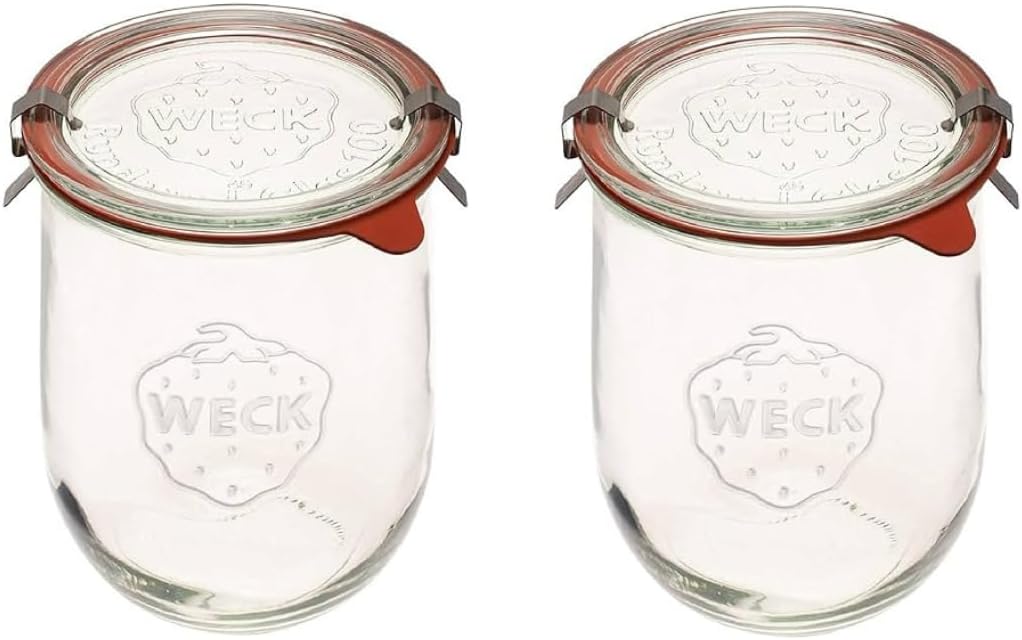
A German-made Weck jar with the brand's iconic orange rubber seal and two stainless steel clips — a beautiful, functional jar for preserving, fermenting, and dry storage.
Considerations
Higher per-jar cost than standard mason jars
Clip mechanism adds assembly steps compared to twist-on mason lids
All-glass-and-rubber construction with zero plastic contact with stored food
Weck's clip-and-gasket seal is one of the most airtight available for non-pressurized storage
Iconic European design looks at home on open shelves and countertops
Rubber gasket is food-safe, replaceable, and widely available
Home cooks who value premium aesthetics, all-glass food contact, and a reliable European seal system for fermented vegetables, jams, and pantry storage.
Fill the jar leaving appropriate headspace, seat the rubber gasket on the glass lid, and clip both stainless clamps to secure. For storage (not pressure canning), the seal creates a reliable airtight environment.
A 4-pack of regular-mouth 16oz glass mason jars with lids and bands — a straightforward, reliable option for lacto-fermentation, canning, and pantry dry storage.
Considerations
Regular-mouth opening is narrower than wide-mouth — limits accessibility for large produce or fermentation weights
Standard two-piece lid not ideal for repeated-access refrigerator storage
4-pack provides enough jars for a meaningful batch fermentation or canning run
Regular-mouth sizing accommodates standard canning lids and many fermentation accessories
Clear glass and clean design suits both functional storage and decorative display
Reliable sealing band-and-lid system compatible with standard replacement lids
Fermenters and canners who prefer regular-mouth jars for their standard lid compatibility and who are building a cost-effective batch production setup.
Pack fermented vegetables with brine ensuring all produce is submerged, apply lid and band fingertip-tight, and ferment at room temperature. For canning, follow USDA-approved processing guidelines.
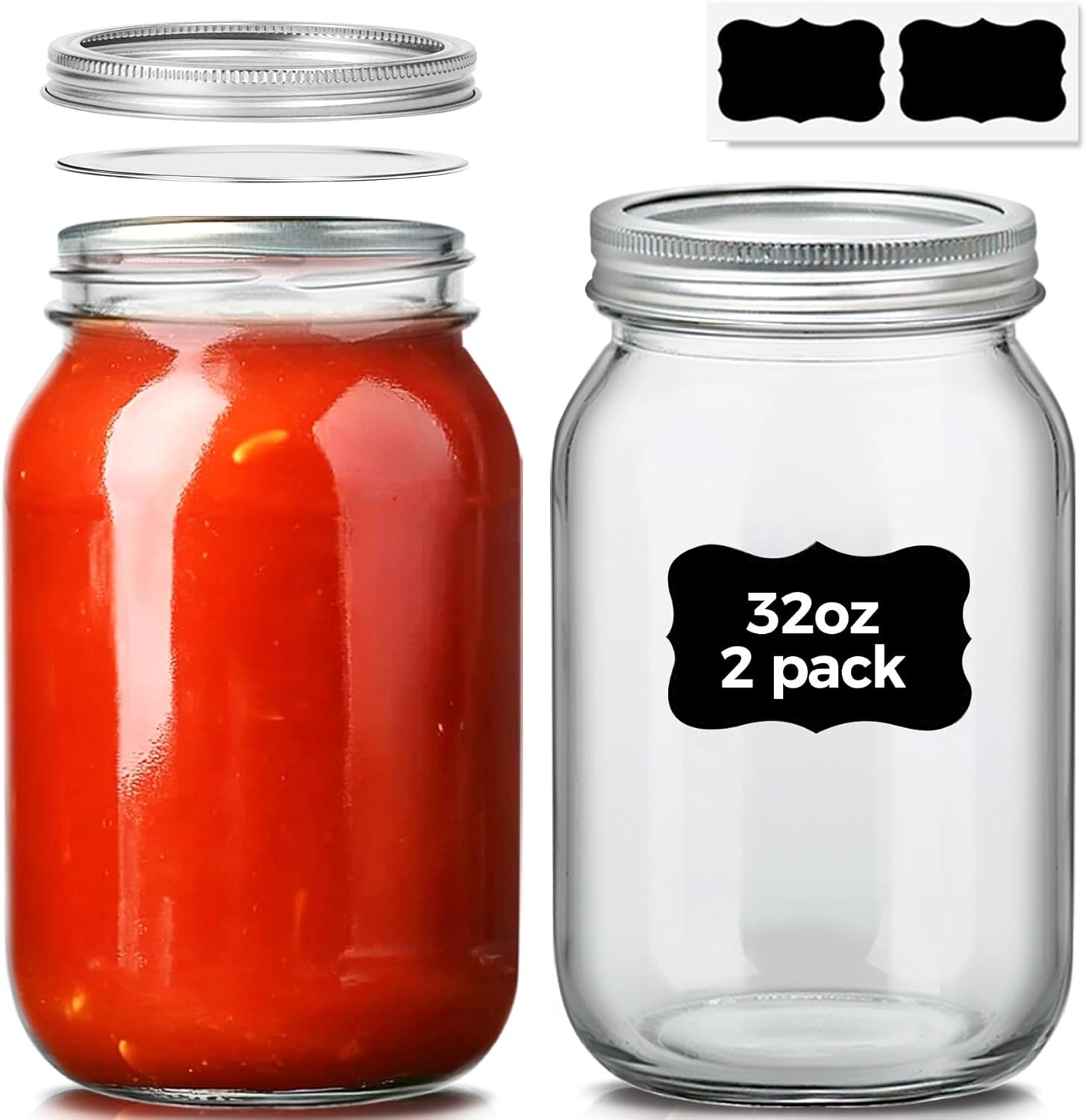
Large-format 32oz wide-mouth glass jars in a 2-pack — the ideal vessel for sourdough starter, kimchi, large fermentation batches, overnight grains, and bulk pantry items.
Considerations
2-pack is a modest quantity — large-batch fermenters will want additional jars
Large size can be cumbersome in small refrigerator spaces
32oz capacity handles sourdough starter, large ferments, and bulk dry goods in one jar
Wide-mouth opening accepts fermentation weights and airlock lids easily
Clear glass with measurement markings helps track fermentation rise and fill levels
Two-pack covers the starter jar plus a backup or hotel jar for sourdough culture
Sourdough bakers, kimchi makers, and bulk dry storage enthusiasts who need large-format wide-mouth glass jars for high-volume kitchen projects.
Use as sourdough starter jars (the measurement markings show rise levels precisely), large fermentation vessels for kimchi or sauerkraut, or bulk dry storage for flour and grains.
Paksh Novelty Wide Mouth Mason Jars with Lids, 32 oz (2-Pack)
Classic 32 oz wide-mouth glass quart jars with lids — the workhorse size for canning, pickling, jelly preserving, and weekly meal prep, sold as a practical two-pack.
Considerations
Two-pack runs out fast if you ferment multiple batches simultaneously
Included metal lids can corrode with salty ferments — swap for fermentation lids
Wide mouth makes packing vegetables and reaching inside to clean effortless
Quart capacity is the standard size for sauerkraut, pickles, and batch ferments
Compatible with standard wide-mouth fermentation lids, weights, and airlocks
Sturdy glass handles hot-water-bath canning and refrigerator storage alike
Fermenters and canners who want the classic quart wide-mouth format that nearly every fermentation lid, weight, and airlock accessory on the market is designed to fit.
Wash and sterilize before first use, pack with brined vegetables leaving headspace, and cap with the included lid for storage or a fermentation lid for active ferments. Wide-mouth accessories screw straight on.
Iconic German-made 1-liter Weck tulip jars with all-glass lids — a favorite of sourdough bakers and fermenters for their wide mouths, plastic-free design, and countertop-worthy looks.
Considerations
Pricier per jar than standard mason jars
Glass lids don't seal airtight without separately sourced gaskets and clamps
All-glass lid rests loosely — perfect for sourdough starters that need to breathe
Extra-wide tulip mouth makes stirring, feeding, and scraping starters easy
Completely plastic-free storage with no coatings or gaskets touching food
Beautiful enough to live on the counter as functional kitchen décor
Sourdough bakers and aesthetically minded fermenters who want a wide-mouth, plastic-free jar where the lid can rest loosely for gas exchange during active fermentation.
For sourdough, feed your starter in the jar and rest the glass lid on top to allow gases to escape. For canning or storage, add the appropriate Weck gasket and clamps to create a proper seal.
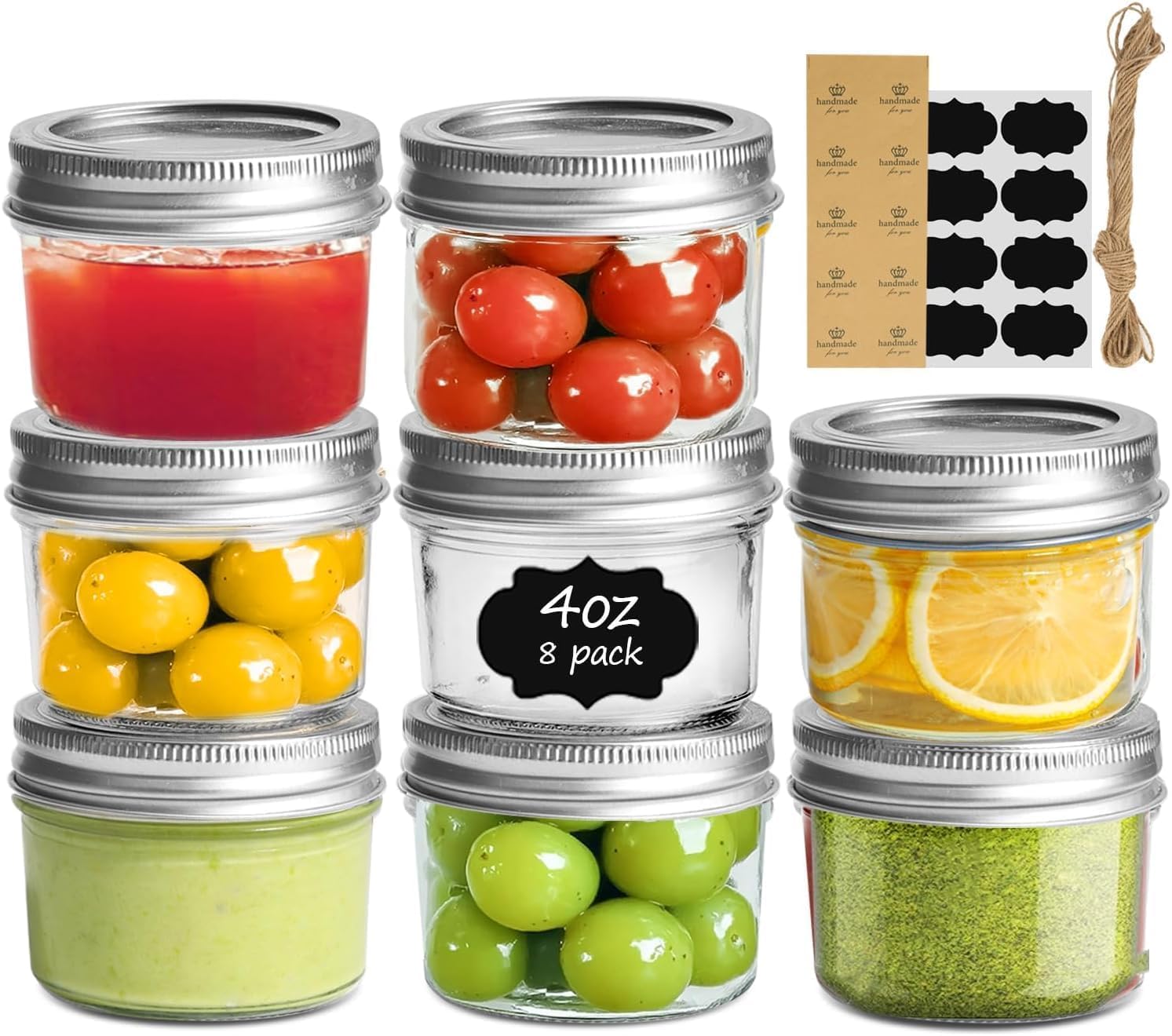
Eight regular-mouth 4 oz glass mini mason jars with lids — the ideal single-serving size for jams, hot sauces, fermented condiments, spice storage, and edible gifts.
Considerations
Too small for vegetable ferments that need brine depth and headspace
Regular mouth is narrower to fill — a small funnel helps avoid spills
4 oz size is perfect for hot sauce, jam, and small-batch condiment ferments
Eight-jar pack portions one big batch into many giftable servings
Regular-mouth threads accept standard mason lids and accessories
Compact jars stack neatly and maximize refrigerator door space
Fermenters and preservers who finish big batches into single-serving portions — hot sauces, jams, mustards, and spice blends — or give homemade ferments as gifts.
Fill with finished sauces, jams, or condiments using a small funnel, leaving a little headspace. Cap tightly for refrigerator storage, or process in a water bath for shelf-stable preserves following a tested recipe.
Note: Store fermented vegetables in the back of the refrigerator where temperatures are most stable — temperature fluctuations near the door can cause lid seals to loosen over time.
Buying Guide
Regular vs. Wide Mouth: Which to Choose
Mason jars come in two rim diameters that determine which lids and accessories fit. Regular mouth jars (approximately 2.75-inch opening) are slightly narrower, which makes them better suited for pourable items like sauces, juices, and beverages. Wide-mouth jars (approximately 3.38-inch opening) are easier to fill, pack, and clean — essential for fermentation, where you need to pack dense vegetables and retrieve weights, and for overnight oats, where you scoop directly from the jar. The wide-mouth format also accepts a significantly wider range of fermentation accessories, airlock lids, and vacuum sealer attachments. Most fermenters and meal preppers build primarily wide-mouth collections and maintain a smaller regular-mouth set for liquid storage. The National Center for Home Food Preservation recommends wide-mouth jars for most fermentation applications due to their superior accessibility.
Standard Band-and-Lid vs. Specialty Lid Systems
The standard Ball and Kerr two-piece lid system — a flat lid with a sealing compound plus a threaded band — is the universal baseline for mason jar storage and canning. It creates a reliable one-use seal for pressure canning and a reusable seal for refrigerator storage. European clip-seal systems, such as the Weck orange rubber gasket and stainless steel clips, offer an all-glass-and-rubber food contact surface with a strong reusable seal for refrigerator and pantry storage. Specialty airtight lid systems with silicone gaskets and press-lock mechanisms provide stronger refrigerator seals than the standard two-piece lid, better suited for storing fermented vegetables or infused liquids. For fermentation specifically, purpose-built airlock lids — discussed in our fermentation lids guide — replace the standard lid during active fermentation to allow CO2 release.
Material Safety and Food Contact Standards
All mason jars in this guide are made from soda-lime glass certified to FDA food contact standards. Glass is non-reactive, non-porous, and produces no off-flavors regardless of what is stored inside — unlike plastic containers that can absorb odors and leach compounds under certain conditions. The National Institutes of Health has published research documenting the superior food safety profile of glass over plastic for acidic food storage. For lids, look for BPA-free designations on any plastic lid components. Silicone gaskets and rubber seals should be food-grade certified. Stainless steel bands and clips are fully non-reactive and dishwasher-safe. European Weck rubber gaskets are food-safe and widely available as replacements.
Sizing Your Collection
Building a mason jar collection requires matching jar sizes to their primary use cases. The 8oz wide-mouth jar is ideal for individual fermentation portions, condiments, and dessert cups. The 16oz wide-mouth jar is the most versatile all-purpose size — suitable for overnight oats, single-batch ferments, yogurt, sauces, and most meal prep portions. The 32oz wide-mouth jar handles sourdough starter, large batch fermentation of kimchi or sauerkraut, bulk pantry dry goods, and overnight grain soaking. A practical starter collection for a kitchen focused on fermentation and meal prep is six to twelve 16oz wide-mouth jars plus two to four 32oz wide-mouth jars for larger batch work.
Yes — mason jars are the most popular fermentation vessel for home fermenters. For lacto-fermentation of vegetables, pack the jar with salted produce, ensure the brine covers all vegetables, and use either a standard lid (burped daily during active fermentation) or a purpose-built fermentation airlock lid. Wide-mouth jars are preferred because they accept fermentation weights that keep vegetables submerged below the brine line.
Glass mason jars are dishwasher-safe. Standard metal two-piece lids should be hand-washed to preserve the sealing compound — dishwasher heat can degrade the sealing gasket over multiple cycles. European Weck glass lids are dishwasher-safe; rubber gaskets should be hand-washed or replaced periodically. Plastic specialty lids vary — check manufacturer guidance, but most recommend hand-washing to preserve gasket integrity.
For lacto-fermentation (not pressure canning), thorough cleaning with hot soapy water followed by a complete rinse is sufficient. For extra security, fill the clean jar with boiling water, let sit for 2 minutes, and empty. Or run through a hot dishwasher cycle. The acidic brine environment of lacto-fermentation is self-protecting against most pathogens — sterility is far less critical than for canning, where you need to eliminate all bacteria before sealing.
Yes, but only jars explicitly tested and certified for pressure canning — Ball, Kerr, and other brands meeting USDA standards. Never pressure-can in jars not designed for it, including European Weck jars, decorative jars, or repurposed commercial food jars. The USDA's National Center for Home Food Preservation provides specific jar, lid, and processing guidance that should be followed precisely for pressure canning safety.
Use a wide-mouth jar with a loose-fitting lid that allows gas exchange without sealing airtight — standard lids placed on loosely without screwing down the band, or lids with small holes, work well. The jar should be large enough for the starter to double in volume after feeding. A 32oz wide-mouth jar suits most sourdough starters. Mark the rise level with a rubber band or tape after each feeding to track doubling activity.
Glass mason jars can last decades with proper care — inspect after each use for chips, cracks, or star-shaped fractures near the rim that compromise the seal. Metal lids should be replaced after each canning use (the sealing compound is single-use for pressure canning). For fermentation and storage use, lids can be reused until the sealing gasket shows degradation. European Weck rubber gaskets typically last 1–2 years before replacement.
Our Recommendation
For most home cooks, our Best Overall pick — Ball Wide Mouth Mason Jars 16 oz 3-Pack with Lids — offers the best balance of performance, reliability, and value. If budget is a priority, our Best Value pick — NETANY 6-Pack 16 oz Overnight Oats Glass Jars with Lids — delivers excellent results at a lower investment. Experienced cooks who want maximum performance should consider our Editor's Pick — ComSaf Wide Mouth Mason Jars 8 oz 6-Pack.